
Benson, Oxfordshire
Flat-roof solar PV in Benson, Oxfordshire
A specialist flat-roof mounting system turning an unused section of flat roof into a working array, with a tidy internal electrical installation.
- Solar PV
- Flat roof, specialist mounting system
- Internally mounted
- EIC, PV certification, Building Regs notification
Photographs from the installation
Every photograph below is from this job in Benson.
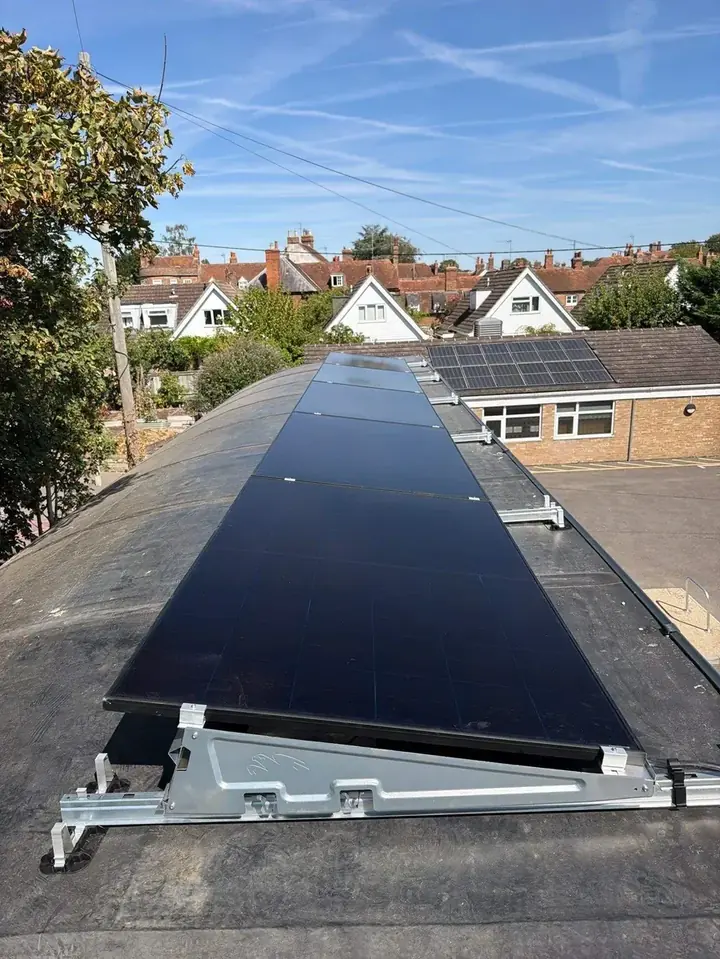
The finished array, set at pitch on the flat-roof mounting system and run as one clean row so the panels do not shade one another. 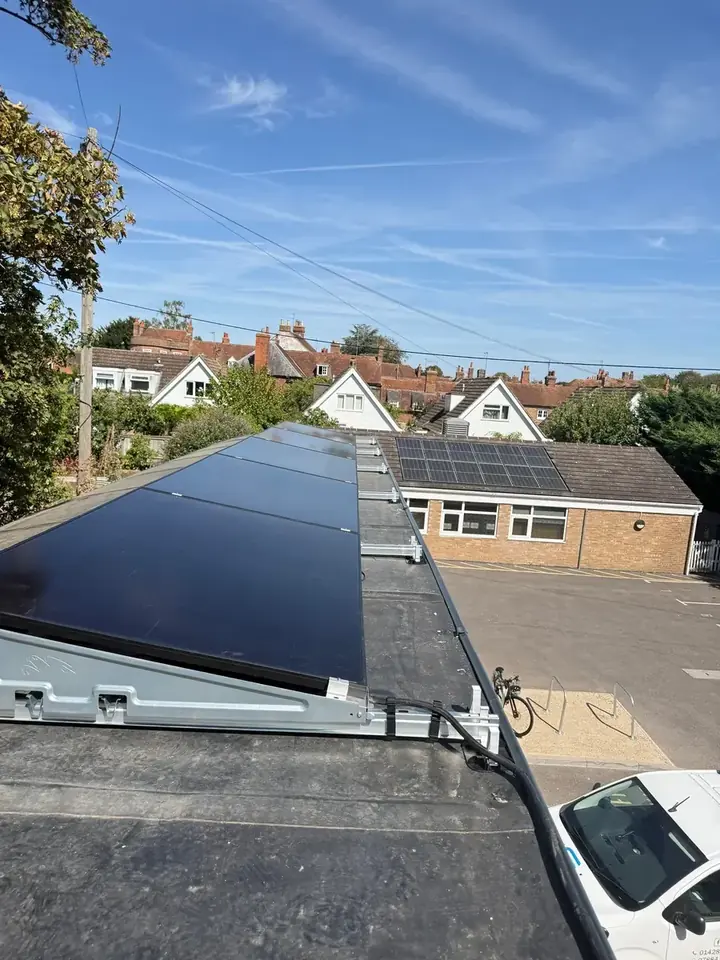
The mounting frame that holds the array at the correct angle and takes the wind loading, fixed without penetrating the roof covering. 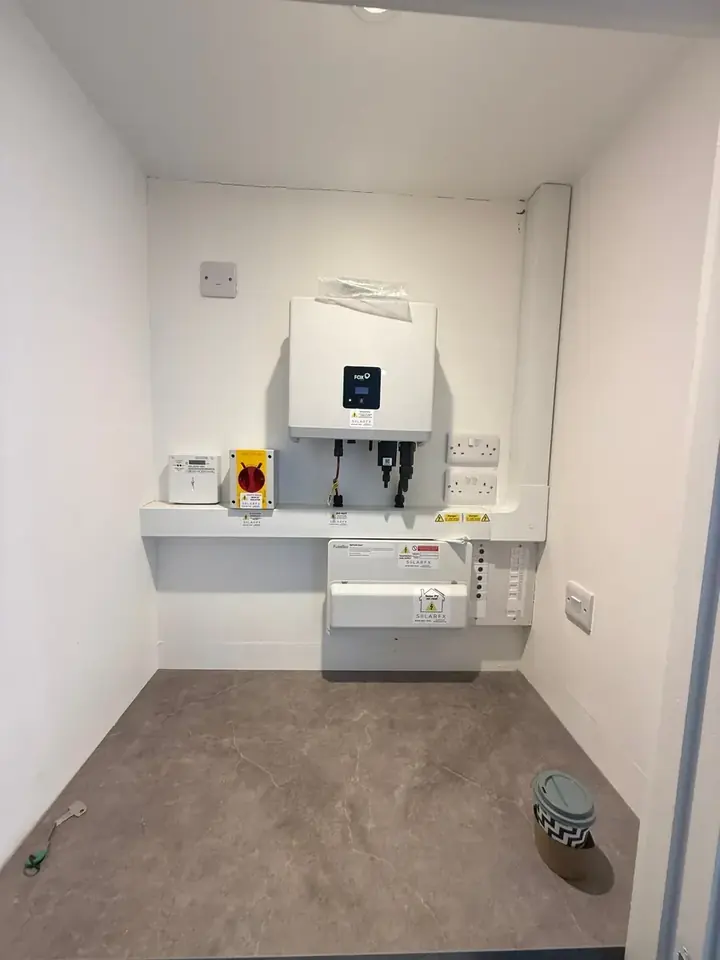
The inverter, generation meter, isolation and protection equipment kept together in one internal location. 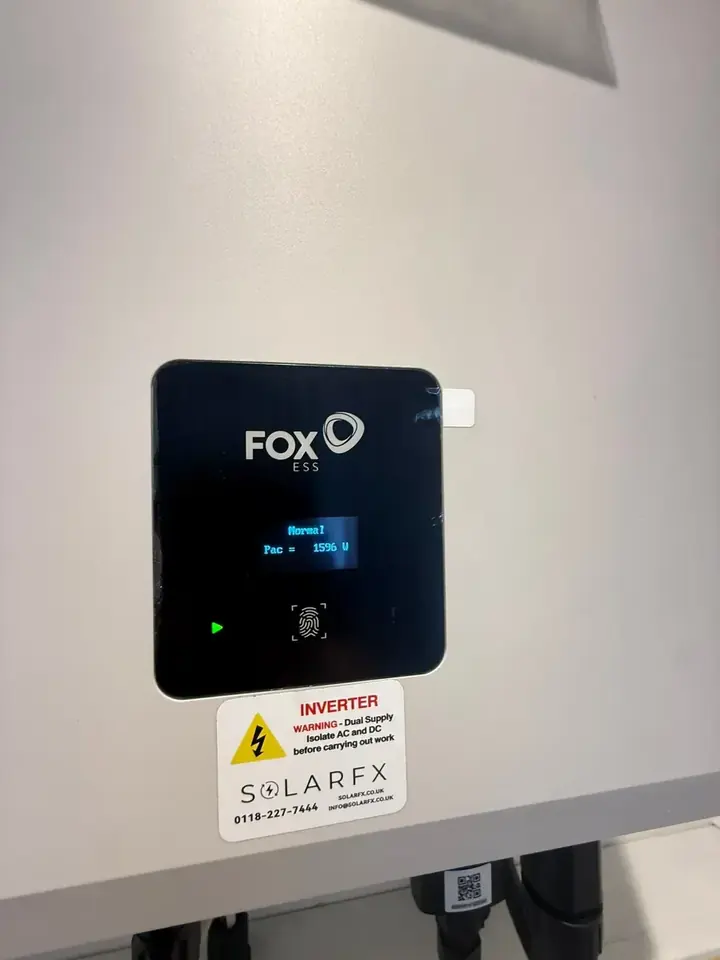
The inverter after commissioning, converting the DC from the roof into the AC the house runs on. 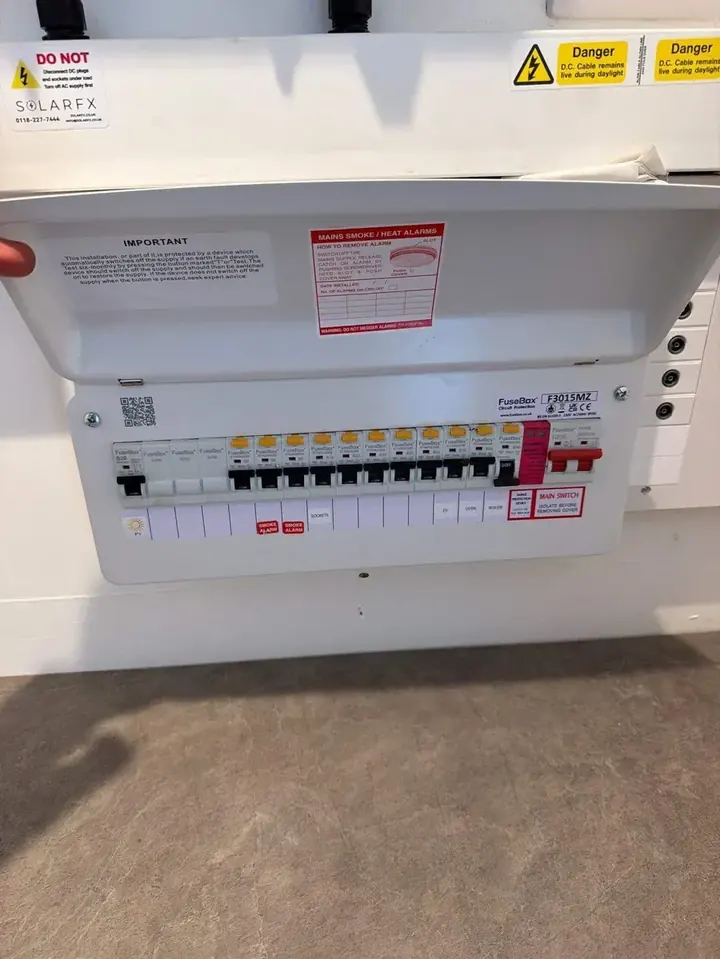
Consumer unit integration with the solar circuits protected and clearly labelled for whoever opens it next.
The challenge
A flat roof is a different job from a conventional pitched one. Panels cannot simply be fixed down onto tiles — they have to be raised to the right angle, held securely against wind, and arranged so they do not shade one another.
We used a specialist flat-roof mounting system to set the array at the correct pitch while keeping the fixings secure, and ran the panels in a single clean row across the roof with cable management sorted throughout rather than left as an afterthought.
Inverter and switchgear
The inverter sits at the centre of the system, installed internally in a dedicated area. It converts the DC electricity the panels generate into the AC electricity the house actually runs on. Keeping the inverter and its associated equipment together in one place makes the installation tidy and easy to get at later.
Electrical installation
Our electrical team fitted everything needed to integrate the array safely with the property’s existing supply, and labelled all of it clearly — which matters more than it sounds, because the next person who opens that cupboard should be able to understand it at a glance.
The completed electrical installation included the inverter, a solar generation meter, AC and DC isolation, solar protection equipment, consumer unit integration, roof-to-inverter cabling and external isolation.
Testing and commissioning
With the physical installation finished, the array and electrical equipment were fully tested before anything was switched on. Electrical readings were taken across the installation to confirm it was operating correctly and safely, and the inverter was then commissioned and the system brought online.
Certification
The installation was issued with an Electrical Installation Certificate confirming the electrical work had been inspected, tested and completed to the relevant requirements, along with the solar PV documentation covering the completed array, and a Building Regulations notification.
The result
A discreet flat-roof array paired with a clean internal electrical installation. The care went into the parts most people never look at — cable routing, protection, equipment positioning and labelling — which is what separates an installation that ages well from one that does not.
We work across this area regularly. What we install in Didcot.
Related services
- Flat roof solarBallasted and mechanically fixed arrays on flat roofs, designed around wind loading and the membrane underneath.
- Solar panel installationSurvey, design, roof works, electrical works and commissioning for a domestic solar PV system.
- System monitoring and optimisationGetting proper data out of a system, then changing its settings so it earns more from the same hardware.
The technology behind it
- Mounting systemsHooks, rails, clamps and fixings — the part of the installation that decides whether the roof stays watertight.
- String invertersThe conventional central inverter: how strings are designed, where it is the best value, and where it is the wrong choice.
- Monitoring systemsWhat generation, consumption and battery data actually tells you, and what a system needs fitted to produce it.
Property and roof guides
Further reading
- In-roof vs on-roof solarHow the two mounting approaches differ in appearance, weathering, cost and suitability for different roofs.
- What is MCS certification?What the MCS scheme covers, why it applies to both products and installers, and what it means for your paperwork.
- Scaffolding and access for solarWhy scaffolding is needed, what affects the cost and duration, and what to expect around your property.
Where we work
Want something similar?
Every system is designed around the property in front of us. Tell us the postcode and what you are trying to achieve.