
System Monitoring and Optimisation
Getting proper data out of a system, then changing its settings so it earns more from the same hardware.
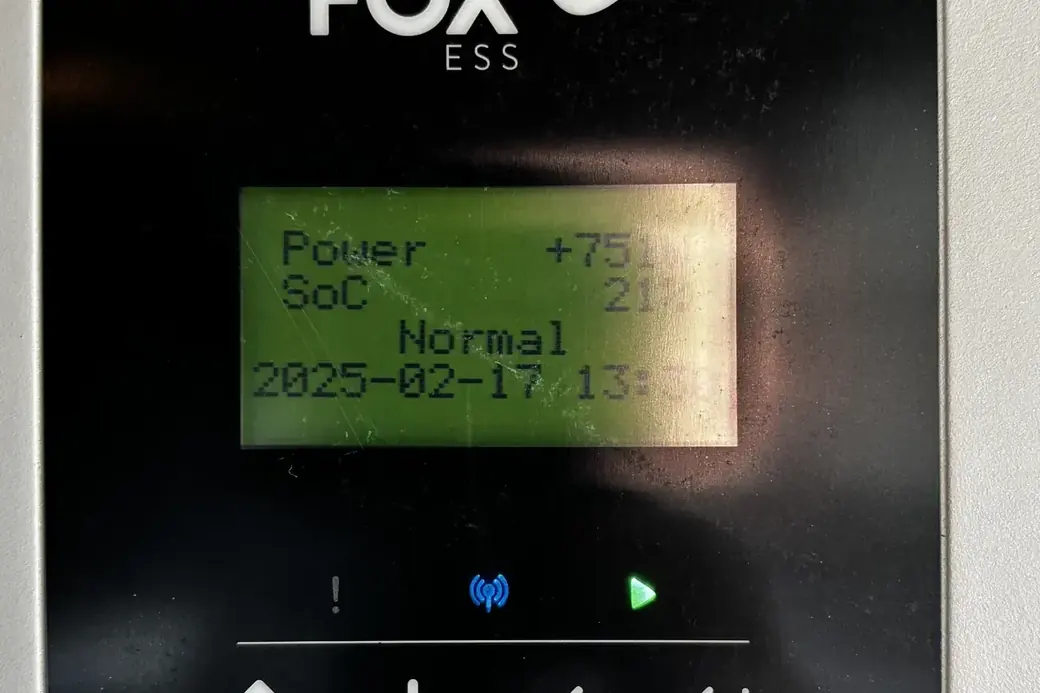
You cannot manage what you cannot see
Most domestic systems report one number: how much the array generated. It is the least useful of the numbers available.
What determines the value of a solar and storage system is self-consumption — the proportion of generation you use yourself instead of exporting. Two identical arrays on identical roofs can differ substantially in what they are worth, entirely because of when the households are in and what their equipment is set to do.
Measuring that requires consumption data as well as generation data, and most installations were never fitted with it.
Levels of monitoring
Inverter level is what almost everyone has. Total generation, current output, and a fault log. Enough to know the system is alive.
Consumption level adds current transformer clamps or a meter at the incoming supply. Now you can see import, export, self-consumption and the shape of your demand across the day. This is the single most valuable addition to an existing system and it is usually a straightforward job at the consumer unit.
String level distinguishes one part of the array from another. On an east-west split it tells you immediately if one face has a problem.
Panel level requires optimisers or microinverters and gives per-module output. It is the only arrangement that shows you a single failing panel among twenty without anyone going onto the roof.
Building a baseline
An output figure means nothing on its own. It means something when compared to what your roof should produce.
We model an expectation from your array size, orientation, pitch, and the shading measured at survey, then compare actual output against it month by month. Deviations have characteristic shapes:
- A flat-topped curve on bright days suggests the inverter is clipping, which may be by design or may mean the array and inverter are poorly matched.
- A late morning start points at shading from something to the east, or an optimiser reporting late.
- A repeatable afternoon notch is almost always a fixed obstruction — a chimney, a flue, a neighbouring gable.
- A slow annual decline beyond normal degradation points at soiling, a failing bypass diode, or falling insulation resistance.
Optimisation is about schedules
Once the data is there, most of the gains come from settings rather than hardware.
Battery charge windows should match the cheap hours of your current tariff, not the tariff you were on when the system was commissioned. Discharge limits should reserve enough capacity to cover the expensive evening period without emptying the battery by seven o’clock. Where a forecast-aware mode is available, the battery can hold back overnight charging when tomorrow looks bright, and fill up when it does not.
Then there is the order of priorities for surplus: house load, battery, EV, export — or some other sequence, depending on your export rate and how much you drive. There is no universally correct answer, which is precisely why it is worth setting deliberately.
Alerting
A fault that nobody notices costs more than a fault that gets fixed. We set alerting so that a zero-generation day, a repeated inverter fault, or a string dropping out reaches you by notification or email rather than waiting for you to open an app you check twice a year.
Who this is for
- Systems where only generation is recorded and consumption is guessed
- Households that have changed tariff since the system was commissioned
- Homes that have added an EV, heat pump or battery since installation
- Owners who suspect underperformance but have no data to test it against
- Anyone whose monitoring stopped reporting after a router change
What is included, and what is not
Included as standard
- Review of what your existing monitoring measures and what it is missing
- Installation of CT clamps or a meter to record consumption as well as generation
- Connection of the inverter or gateway to your network, wired where possible
- Panel-level or string-level data configuration where the hardware supports it
- Alerting set up so a fault reaches you rather than sitting in a portal
- Baseline performance assessment against a modelled expectation for your site
- Battery charge and discharge scheduling matched to your current tariff
- Export behaviour configured against your export arrangement
- A walkthrough of what the figures mean and which ones matter
Not included
- Replacement of an inverter with no monitoring capability at all
- Home network installation, extension or repair
- Third-party energy management platforms with ongoing subscriptions
- Tariff switching, which remains between you and your supplier
Anything in this column that your property turns out to need is identified at survey and priced in the written quotation, not raised later as a variation.
Timescale
Usually a half-day visit, followed by a review once a fortnight of data has accumulated.
What affects the cost
| Factor | Why it matters |
|---|---|
| Whether metering hardware needs adding at the consumer unit | Assessed at survey and reflected in the fixed written quotation. |
| Access to the inverter and whether a wired network route is practical | Assessed at survey and reflected in the fixed written quotation. |
| Presence of optimisers or microinverters and the per-panel data they provide | Assessed at survey and reflected in the fixed written quotation. |
| Number of inverters, batteries or buildings to bring into one view | Assessed at survey and reflected in the fixed written quotation. |
| Whether a follow-up review visit is included | Assessed at survey and reflected in the fixed written quotation. |
New to this? Start with how domestic solar works and what battery storage changes, then come back to the detail.
Common questions
My inverter app shows generation. Is that not monitoring?
It is half of it. Generation alone tells you what the array made, not what you did with it. Without consumption measurement you cannot see your self-consumption rate, which is the number that determines what the system is actually worth to you. Adding CT clamps at the consumer unit is usually a straightforward addition and it changes what you can see completely.
What does optimisation actually change if the hardware stays the same?
Settings and schedules. When the battery charges and to what level, what happens to surplus when the battery is full, whether the car charges from the grid or from export, and whether the system holds charge for an evening peak or spends it as it arrives. On a time-of-use tariff these choices move real money, and most systems are left on the defaults set at commissioning.
How do I know whether my system is underperforming?
By comparing it to a modelled expectation for your specific roof — its orientation, pitch, shading and array size — rather than to a neighbour or a national average. We build that baseline, then look at the shape of the daily curve. A clipped peak, a late start, a dip at the same time each afternoon and a gradual annual decline all have different causes and different fixes.
Does monitoring need to be connected to the internet?
For remote alerting and historical data, yes. Most inverters will log locally for a period and display on their own screen, but you lose the history and you lose any chance of the system telling you something is wrong. Where WiFi is unreliable at the inverter position, a wired connection or a powerline adaptor is worth the effort.
Related services
- Solar panel maintenanceScheduled servicing of the whole system — array, fixings, DC side, inverter and monitoring — not just the glass.
- Solar health checkA one-off independent assessment of an existing system, with a written report on its condition and performance.
- Battery retrofitAdding storage to a solar system that is already on the roof, without disturbing what works.
- Inverter replacementReplacing a failed or ageing inverter, matched to the array that is already on the roof.
The technology behind it
- Monitoring systemsWhat generation, consumption and battery data actually tells you, and what a system needs fitted to produce it.
- Power optimisersPer-panel DC electronics that keep conversion in one accessible box: the middle option between string and micro.
- MicroinvertersOne inverter per panel mounted on the roof: what per-panel conversion buys, and what it costs.
- Hybrid invertersA single unit managing array, battery and house demand, and when fitting one is worth the extra cost.
Property and roof guides
See it on a real installation
- A complete home energy system in Reading, BerkshireTen panels across a pitched garage roof, battery storage against the wall below, and an EV charger — designed as one system rather than three separate jobs.
- Solar, storage and EV charging in Padworth, BerkshireA whole-home energy system on an established tiled roof — solar PV, battery storage, EV charging and a surplus diverter for hot water.
Further reading
- Signs your solar system is underperformingHow to tell a genuine fault from normal seasonal variation, and the checks worth doing before calling anyone out.
- The Smart Export Guarantee explainedWhat the SEG obliges suppliers to do, what it does not fix, and what you need in place to apply.
- How much can solar panels save?The factors that determine a solar saving, the assumptions any estimate must state, and how to read a quotation critically.
Where we work
Information reviewed on 2026-08-23.
Book a free design and quotation
Tell us about the property and we will arrange a survey, then issue a written design and fixed quotation before any work is agreed.
Enquire about system monitoring and optimisation
No obligation. We will review the details, come back to arrange the next step, and issue a written design and fixed quotation before anything is agreed.
Prefer to talk? Call 0118 227 7444.