
Solar PV Health Check
A one-off independent assessment of an existing system, with a written report on its condition and performance.
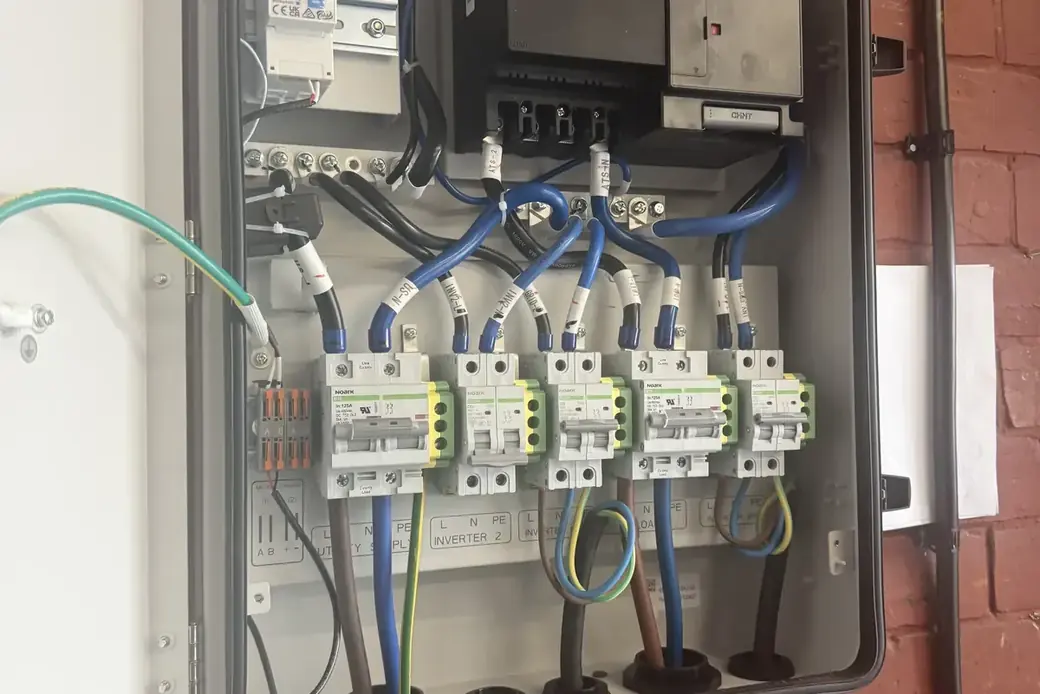
An assessment, not a sales visit
A health check produces a report. It does not produce a quotation unless you ask for one afterwards, and the report says what it says regardless of whether there is work in it for us.
That distinction matters because most people asking for one are in a position of not knowing what they have. They bought a house with panels on it, or they inherited a system from a company that no longer exists, or they have suspected for two years that the array is not doing what it was supposed to.
The paperwork question
The first thing we look at is what documentation survives. For an existing installation the set should include an MCS certificate, an Electrical Installation Certificate, the DNO notification or G99 approval, warranty registrations, and any export or Feed-in Tariff agreement.
MCS certification matters beyond tidiness: it is the basis on which an installation qualifies for a Smart Export Guarantee tariff. A system with no MCS certificate can still be perfectly good, but it will be harder to place on an export tariff, and that is worth knowing before you assume an income.
Where paperwork has gone missing we tell you what can realistically be reconstructed and what cannot. Some of it can be recovered from the certification body or the network operator; some of it cannot be recovered at all.
What we inspect
The physical inspection covers the array and its interface with the roof — fixing method, whether hooks landed in rafters, whether the covering was relieved properly, clamp condition, rail alignment and any movement. Then the DC side: cable routing and support, UV condition, connector types and whether mixed brands have been mated, and the state of any rooftop isolator.
Inside, the inverter is inspected for its siting, ventilation, event history and configured settings. Protection settings on older inverters sometimes do not match what is currently expected, and it is worth checking. The consumer unit connection, isolation arrangements and labelling are assessed against what an electrician arriving in an emergency would need to find.
What we measure
Testing gives the report its weight. String open-circuit voltages compared against each other and against the design. Operating currents corrected for conditions. Insulation resistance on the DC circuits. Earthing and bonding continuity. Where per-panel monitoring exists, a module-by-module review.
Alongside that we model what the roof should produce, using its actual orientation, pitch, array size and measured shading, and compare it against whatever generation history is available. A system producing well below expectation with no electrical fault usually has a shading, soiling or configuration explanation, and the data narrows it down.
The report
You get a written document with photographs, organised by urgency rather than by component. Anything with a safety implication is flagged first. Then defects affecting performance or longevity. Then observations worth knowing but not worth acting on yet.
Each finding says what it is, why it matters, and roughly what it would take to put right. Where the sensible answer is to do nothing, the report says that too. And where a system turns out to have been well designed and properly installed, that is a useful thing to have written down — particularly if you are about to buy the house it sits on.
Who this is for
- Buyers of a house with an existing array and no service history
- Owners who inherited a system with the property and have never had it looked at
- Anyone whose output has never matched what they were told at the point of sale
- Systems whose original installer has ceased trading
- Landlords and executors needing a documented position on an installation
What is included, and what is not
Included as standard
- Review of whatever documentation exists, and identification of what is missing
- Confirmation of declared system capacity against what is actually installed
- Visual inspection of the array, mounting, fixings and roof interface
- Inspection of DC cabling, connectors, isolators and containment
- Inverter inspection, event log review and installed settings check
- Consumer unit, isolation, protection and labelling assessment
- String testing and insulation resistance measurement
- Comparison of recorded output against a modelled expectation for the roof
- Battery condition and configuration review where storage is present
- Written report with photographs, findings graded by urgency, and costed options
Not included
- Any remedial work, which is quoted separately once you have the report
- Cleaning, which is a separate visit
- A structural survey of the roof or building
- A valuation, or advice on the price of a property
- Legal opinion on warranty or contractual disputes
Anything in this column that your property turns out to need is identified at survey and priced in the written quotation, not raised later as a variation.
Timescale
Two to four hours on site, with the written report issued within a few working days.
What affects the cost
| Factor | Why it matters |
|---|---|
| Array size, number of strings and whether there are multiple roof faces | Assessed at survey and reflected in the fixed written quotation. |
| Access, and whether the array can be inspected safely without scaffolding | Assessed at survey and reflected in the fixed written quotation. |
| Presence of battery storage and how many units | Assessed at survey and reflected in the fixed written quotation. |
| Whether historical generation data is available to analyse | Assessed at survey and reflected in the fixed written quotation. |
| How much documentation has to be reconstructed from scratch | Assessed at survey and reflected in the fixed written quotation. |
New to this? Start with how domestic solar works and what battery storage changes, then come back to the detail.
Common questions
How is this different from a maintenance visit?
A service is scheduled work on a system you already understand. A health check is a diagnostic assessment of a system nobody has explained to you. It goes wider, includes the paperwork and the performance history, and produces a report intended to help you make a decision rather than a checklist confirming a visit happened.
We are buying a house with solar. What should we ask for?
The MCS certificate, the Electrical Installation Certificate, the DNO notification or G99 approval, any Feed-in Tariff or export agreement and whose name it is in, the inverter manufacturer and its warranty registration, and the monitoring login. Missing paperwork is not fatal but it does affect what can be claimed later, and an export agreement in the seller name needs transferring rather than assuming.
Can you tell me how much longer the system will last?
Not as a number, and anyone who gives you one is guessing. What we can tell you is the condition of each part, the age and known service life of the inverter, whether the modules show visible degradation, whether the mounting and roof interface are sound, and what the output trend suggests. That is enough to plan around without pretending to a precision nobody has.
What if you find the original installation was done badly?
We tell you, with photographs and a clear description of what is wrong and what it means. Sometimes that is a safety matter needing prompt attention; more often it is a list of things worth putting right when access is next available. We do not inflate findings, and we are just as willing to report that a system is in good order.
Related services
- Solar panel maintenanceScheduled servicing of the whole system — array, fixings, DC side, inverter and monitoring — not just the glass.
- Solar panel repairsFault diagnosis and repair on arrays that have stopped working, or never quite worked properly.
- System monitoring and optimisationGetting proper data out of a system, then changing its settings so it earns more from the same hardware.
- Inverter replacementReplacing a failed or ageing inverter, matched to the array that is already on the roof.
- Battery retrofitAdding storage to a solar system that is already on the roof, without disturbing what works.
The technology behind it
- InvertersWhat the inverter does, how MPPT works, and how the four architectures compare honestly against each other.
- Solar panelsWhat a domestic solar panel is, how it is built, and which specifications on the datasheet actually matter.
- Monitoring systemsWhat generation, consumption and battery data actually tells you, and what a system needs fitted to produce it.
- Mounting systemsHooks, rails, clamps and fixings — the part of the installation that decides whether the roof stays watertight.
Property and roof guides
- 1920 to 1965 homesInterwar and early post-war housing: hipped roofs, clay and early concrete tile, central chimneys and modest incoming supplies.
- Post-1965 homesTrussed rafter roofs, concrete interlocking tile and modern electrics — the most straightforward housing stock to work on.
- Victorian terracesNarrow slate slopes, party walls, rear back-additions and scaffolding through a shared alley — terraced solar on its own terms.
Further reading
- Signs your solar system is underperformingHow to tell a genuine fault from normal seasonal variation, and the checks worth doing before calling anyone out.
- Solar panel degradation and lifespanHow panel output declines gradually over time, which components have shorter lives, and what determines how long a system lasts.
- What is MCS certification?What the MCS scheme covers, why it applies to both products and installers, and what it means for your paperwork.
- Solar panels and EPC ratingsHow solar is treated in an EPC assessment, why the improvement varies, and what an assessor needs to see.
Where we work
Information reviewed on 2026-08-23.
Book a free design and quotation
Tell us about the property and we will arrange a survey, then issue a written design and fixed quotation before any work is agreed.
Enquire about solar health check
No obligation. We will review the details, come back to arrange the next step, and issue a written design and fixed quotation before anything is agreed.
Prefer to talk? Call 0118 227 7444.