
Tadley, Hampshire
A compact 3.6kWp AIKO array on a clay-tiled roof in Tadley
Eight high-output AIKO panels on a Renusol system chosen for clay tile — a small array, but one sized properly and fixed properly.
- Solar PV
- 3.6 kWp — 8 x AIKO 445W Gen 2
- Renusol mounting on clay tile
- 3.7 kW inverter
Photographs from the installation
Every photograph below is from this installation in Tadley.
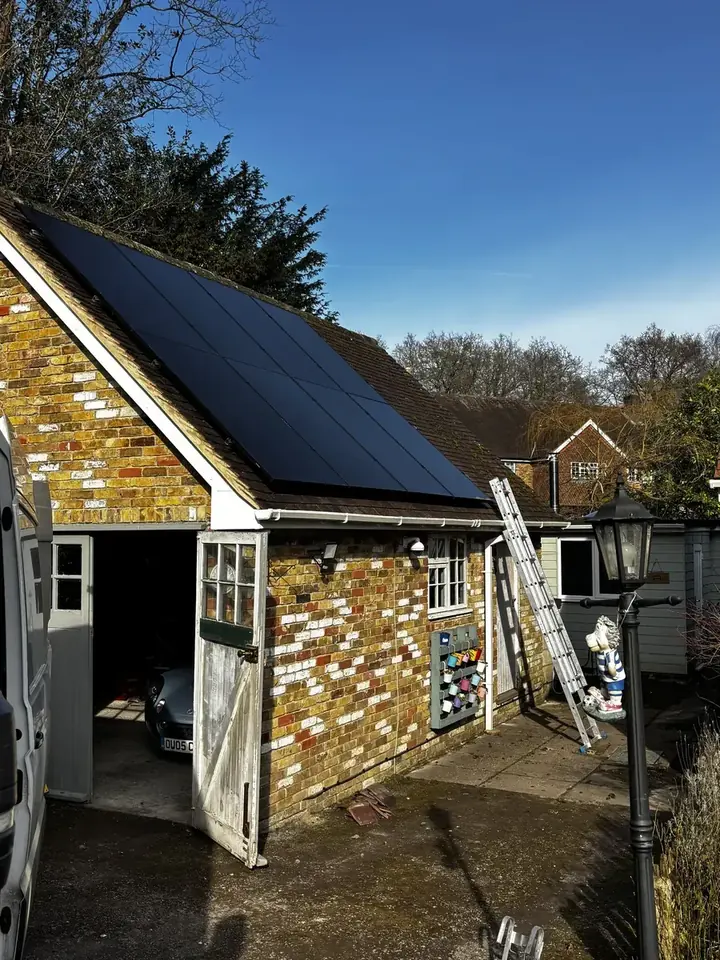
The finished array. Eight panels is a modest count, but AIKO Gen 2 modules put 3.6 kWp into that footprint. 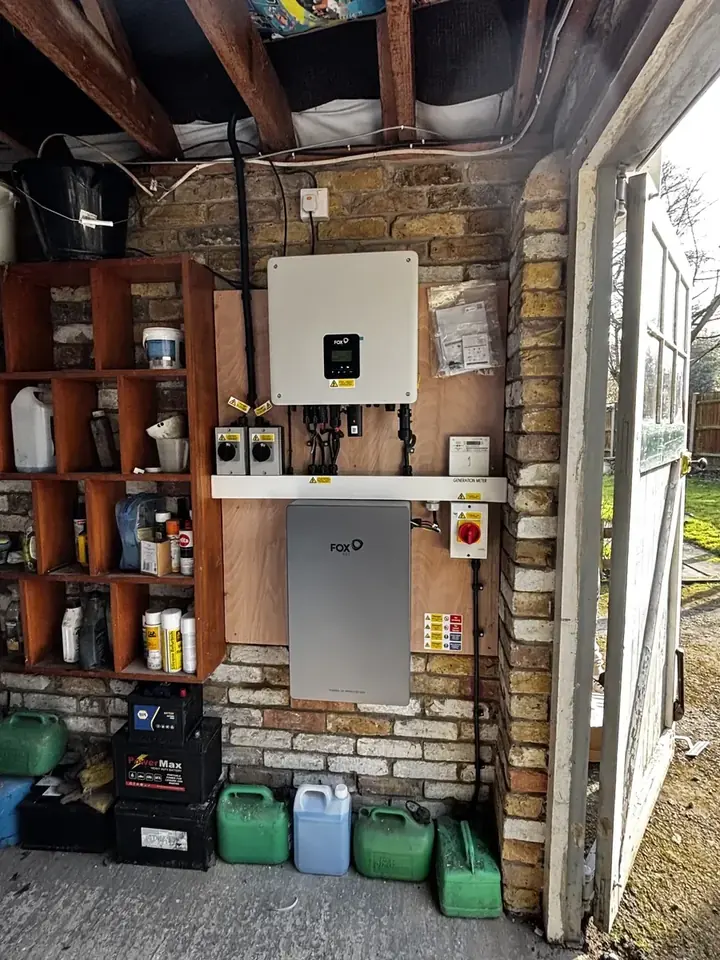
The inverter and associated equipment, mounted together with room to work around them. 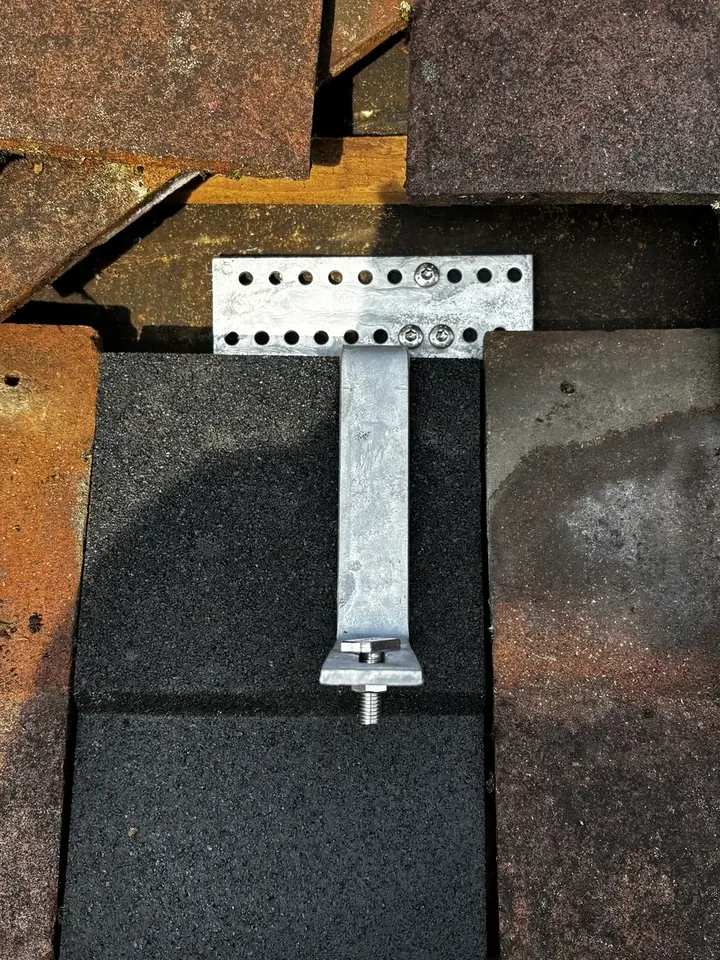
One of 24 Renusol 420150 hooks. The hook profile is chosen for the tile it sits under — get this wrong and the tile above never beds back down. 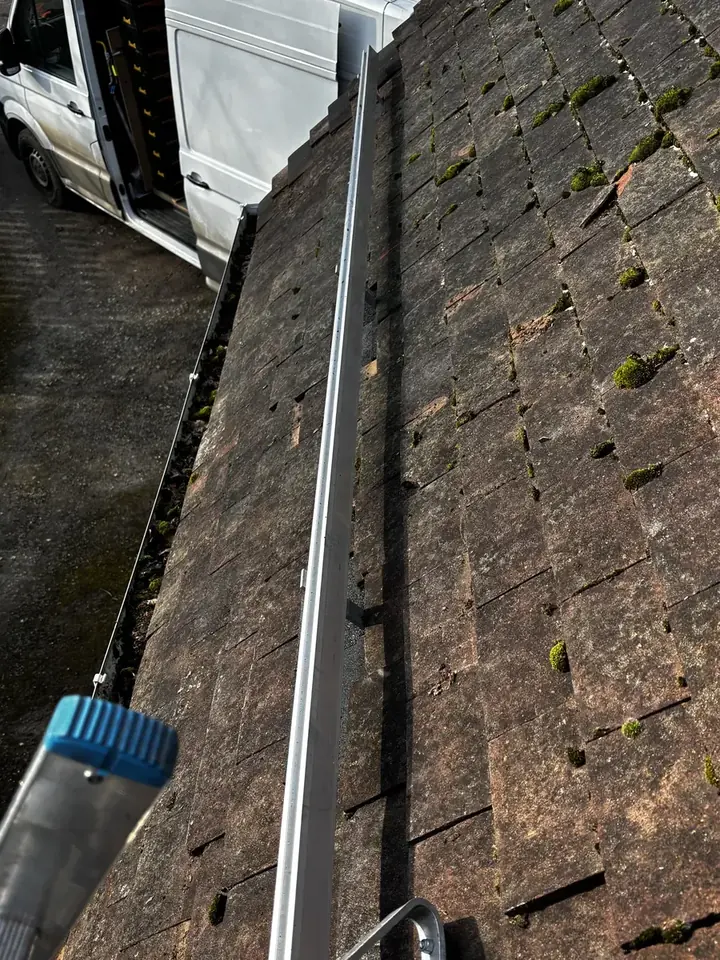
Rails run and levelled across the roof before the panels went on. 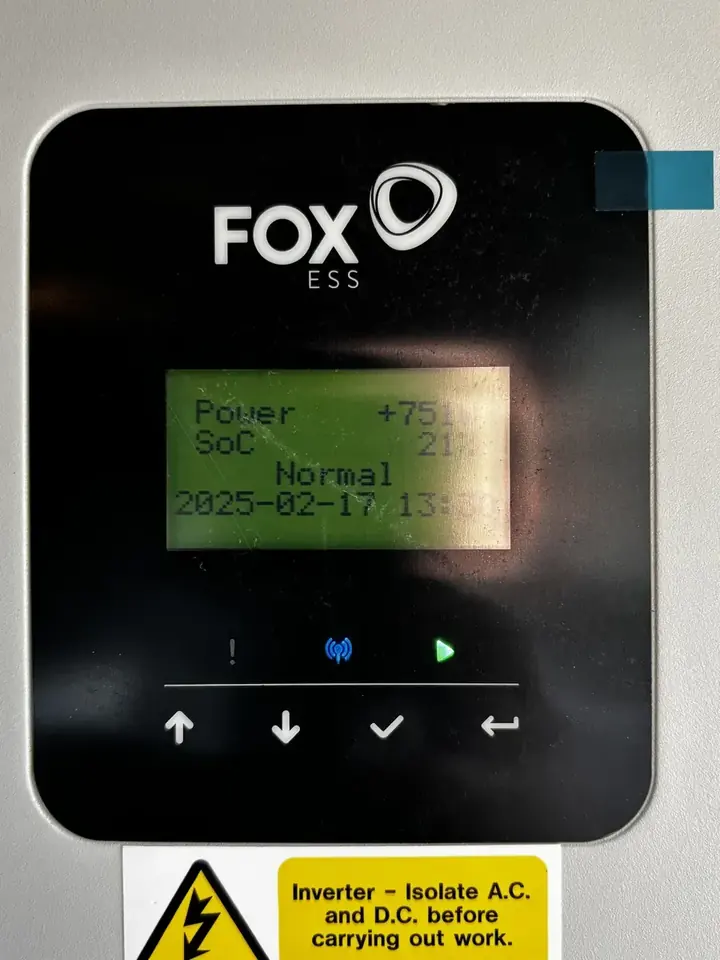
The inverter reporting normal operation at commissioning.
The brief
A compact system for a property with a limited run of clay-tiled roof. The question was not how many panels would physically fit, but how much genuinely usable capacity the roof could carry — and then fixing it in a way that left the clay tiles intact.
The solar array
Eight AIKO A445-MAH54Mb 445W Gen 2 panels were installed, giving 3.6 kWp. These are high-efficiency modules, which is what makes a small roof area worth doing at all: the same footprint with older panels would have returned noticeably less.
The all-black finish keeps the array quiet against the roof.
Mounting on clay tile
Clay tile needs a mounting system matched to it. We used a Renusol system with 24 Renusol 420150 roof hooks, fixed to the roof structure so the load goes into the timbers rather than onto the tiles themselves.
Done properly, the tiles sit back down over the hooks and the roof covering keeps doing its job. This is the single most common place a solar installation goes wrong years later.
Inverter and metering
The array was paired with a 3.7 kW inverter, sized against the installed PV capacity rather than against the roof.
An Emlite ECA2.nz generation meter was fitted so the electricity the array produces is measured accurately. It was commissioned reading 0000.0 kWh, which gives a clean starting point for the system’s lifetime production.
Expected generation
The system is estimated to generate around 3,028 kWh a year. That electricity can be used directly in the property during daylight hours, reducing what has to be bought from the grid, and anything above immediate demand can be exported subject to the chosen export tariff.
An estimate is an estimate. Actual output moves with weather, shading and how the household uses electricity through the day.
Certification and commissioning
The installation was commissioned on 18 February 2025. Testing and certification covered the Electrical Installation Certificate, Part P Building Regulations certification, PV array testing, panel serial number recording, generation meter commissioning and final electrical and solar system checks.
The result
A professionally fixed 3.6 kWp array on a roof covering that punishes shortcuts, using premium panels to get worthwhile output from a small area.
We work across this area regularly. What we install in Basingstoke.
Related services
- Solar panel installationSurvey, design, roof works, electrical works and commissioning for a domestic solar PV system.
- System monitoring and optimisationGetting proper data out of a system, then changing its settings so it earns more from the same hardware.
- Solar and battery systemsPanels, hybrid inverter and storage designed as one system, on one scaffold, with one commissioning.
The technology behind it
- N-type and TOPCon panelsThe cell technology behind the current generation of high-output modules, and what it changes in practice.
- Mounting systemsHooks, rails, clamps and fixings — the part of the installation that decides whether the roof stays watertight.
- String invertersThe conventional central inverter: how strings are designed, where it is the best value, and where it is the wrong choice.
Property and roof guides
Further reading
- How many solar panels do I need?Sizing an array from consumption, roof area and orientation rather than from a round number of panels.
- Roof orientation and shadingHow aspect, pitch and shade change the output of an array, and what can be designed around.
- Smart Export Guarantee explainedHow export payments work, which tariffs pay best, and what you need fitted to claim them.
Where we work
Want something similar?
Every system is designed around the property in front of us. Tell us the postcode and what you are trying to achieve.